Job · Street trees and roots
Street trees, roots and your sewer line
Roots can enter open joints in a sewer lateral, the owner generally maintains that pipe, and in DC a permit from the Urban Forestry Division comes before anyone prunes or removes a street tree.
Revised November 3, 2026 · who makes this map
| Place | What happens there | Turn to |
|---|---|---|
| DC | DC Water says root infiltration is one cause of sewer backups, and that clearing the lateral is a job for a registered master plumber you hire. For a street tree, DDOT's pages say a permit from its Urban Forestry Division comes first, for planting, pruning or removal. | Sheet 1 |
| Arlington | Under county code the lateral is the property owner's. Arlington's page lists a free main-clearing visit and suggests ringing 703-228-6555 before hiring anyone. We did not confirm a county street tree rule. | Sheet 6 |
| Alexandria | Laterals installed before July 1, 1955 are the owner's from the curb to the property; later ones are the owner's from the building to the main. The city page does not say who owns a tree near the pipe. | Sheet 8 |
| Fairfax County | The owner is responsible for the entire lateral, including under public easements and roads. The county's page names roots as a cause and says a plumber may need to cut them again. | Sheet 12 |
| City of Fairfax | City code puts the lateral on the customer up to the main. The city has its own repair reimbursement program. | Sheet 16 |
| Falls Church, Vienna, Herndon | Neither tree rules nor lateral limits could be confirmed from their pages. Ask the town. | Sheet 14 |
How roots reach a sewer pipe
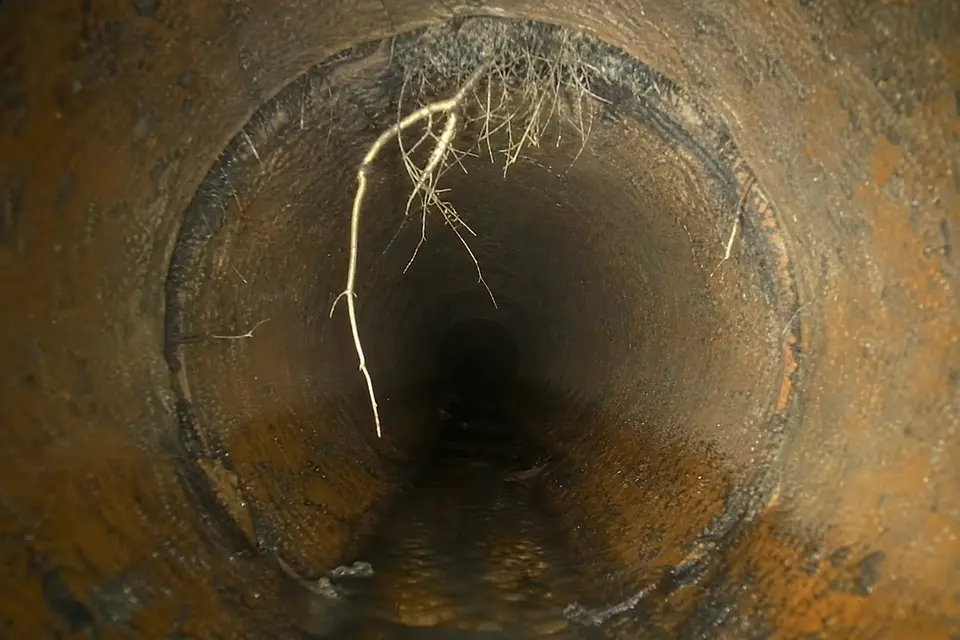
Fairfax County's wastewater page says shrub and tree roots can make their way into open sewer joints or cracks. Over time they can break the line, and debris then collects and backs up. The county names two answers: replace the line with new plastic pipe, or take care where you plant near the pipe. If roots keep returning, the page says a plumber may have to cut them from time to time.
DC Water lists the same cause among its own: soil settlement, misaligned joints, root infiltration, collapses and grease. It adds that backups are more common in the older combined-sewer area.
Who owns the pipe, who owns the tree
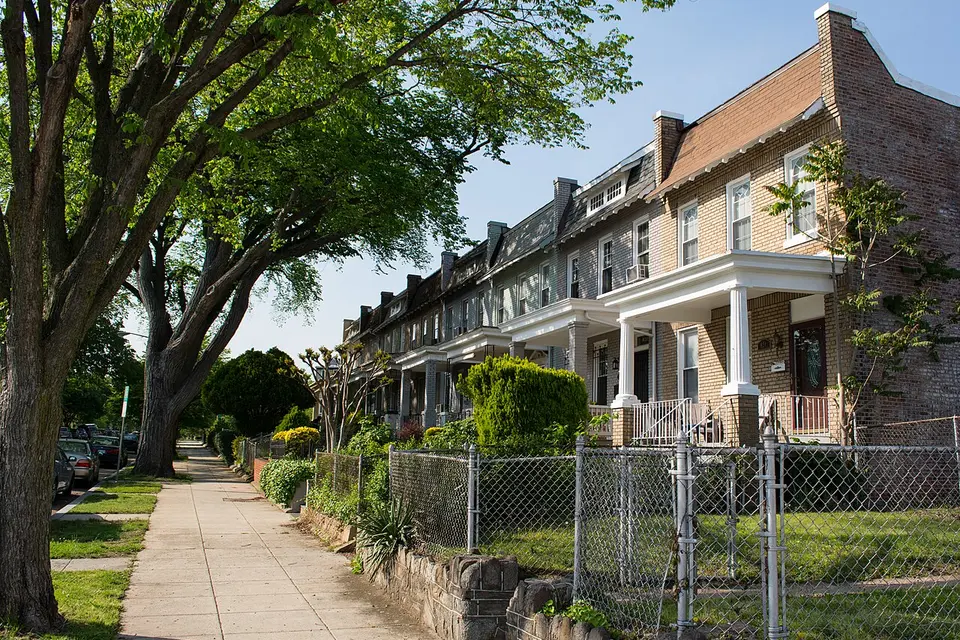
The two answers are separate. The pipe is covered by the lateral rules above and in who owns which pipe. The tree depends on where it stands: on your lot, it is yours; in the strip between sidewalk and street, it may be public.
In DC, DDOT's Urban Forestry Division decides. Its pages say anyone, resident or contractor, who plants, prunes or removes a street tree in public space must get permission first, and the division can deny applications that affect public trees. A larger tree needs a separate permit. These details come from a search summary of DDOT's pages, so confirm on the permit page before you act. Do not cut a street tree or its roots on your own.
In Fairfax County and the City of Fairfax we did not find a county-level rule tying a street tree to your lateral. The City of Fairfax says its urban forestry staff manage trees in the city's public right-of-way, and that VDOT handles roads outside the city, per a search summary. Fairfax County's own advice on neighboring construction says most tree roots in this area sit in the top 24 inches of soil, so a trench can reach them.
What to do when roots are the suspect
Slow drains, gurgling and repeat backups point to the lateral, not always to a tree. If sewage is rising, stop using water, keep everyone away from it and follow the first-call order on basement backups: the sewer authority first in most places, then a licensed plumber. Sewer laterals and trenches are for licensed contractors, and any dig starts with 811. Repair costs and repair programs are covered in sewer lateral repair.
A plumber can use a camera or cable to see what is in the pipe. That is why a cleanout matters.
A cleanout is what a plumber's camera or cable goes in through: cleanouts and plugs at PlumbingSupplyAndMore (that store has the same owners as this map).
Insurance and the unglamorous part
DC Water generally does not pay for cleanup or damages, and suggests an insurance rider. Fairfax County says a standard homeowners' policy does not cover the lateral, while water backup coverage for the interior and optional service line coverage may exist. Read your own policy.
Check your own address
- Find your jurisdiction from your tax record or water bill, not your mailing address; Fairfax County has Alexandria and Falls Church mailing addresses.
- In DC, look up DDOT's tree permit page and ask the Urban Forestry Division before any work on a tree in the strip.
- A sewer backup in DC goes to DC Water on 202-612-3400; in Arlington, ring Arlington on 703-228-6555 if you think the main is the cause.
- In Fairfax County, call the Customer Communications Center on 703-323-1211 before a plumber if you suspect the main.
- Ask any plumber to show you the camera footage and where the roots entered.
Survey notes: sources for this page
- Fairfax County, preventing backups and overflows. Opened November 3, 2026.
- Fairfax County, residential wastewater. Opened November 3, 2026.
- DC Water, sewer backup. Opened November 3, 2026.
- DDOT, apply for a tree permit. Known to us only from a search listing of the page.; not opened.
- Fairfax County, protect your trees during neighboring construction. Known to us only from a search listing of the page.; not opened.
- City of Fairfax, About Urban Forestry. Known to us only from a search listing of the page.; not opened.
- Arlington County, sewer. Known to us only from a search listing of the page; the site would not open for us.
- Alexandria sewer and hydrant maintenance. Opened November 3, 2026.