Job · Backwater valves and rebates
Backwater valves for sewer backups
A backwater valve on your sewer lateral lets waste flow out and blocks it from flowing back in; DC and Alexandria both reimburse part of the cost for qualifying owners, and a licensed plumber must install it.
Revised November 3, 2026 · who makes this map
| Place | What happens there | Turn to |
|---|---|---|
| DC | DC Water's rebate covers 100 percent up to $6,000 for combined-sewer owners with a documented backup since 2012, or a documented backup from the September 10, 2020 storm. The installation needs a DC permit pulled by a DC-licensed master plumber. | Sheet 3 |
| Alexandria | The Backflow Preventer Assistance program reimburses 50 percent up to $2,000 for any city homeowner who applied first and used a plumber licensed by both State and City. The page was updated April 2, 2026. | Sheet 8 |
| Arlington | We found no county valve program on the pages available. The county clears its main at no charge; the lateral is the owner's. | Sheet 7 |
| Fairfax County and the towns | We found no valve rebate. Fairfax County says the owner maintains the private lateral. Permits come from Land Development Services in unincorporated areas. | Sheet 12 |
What the device does
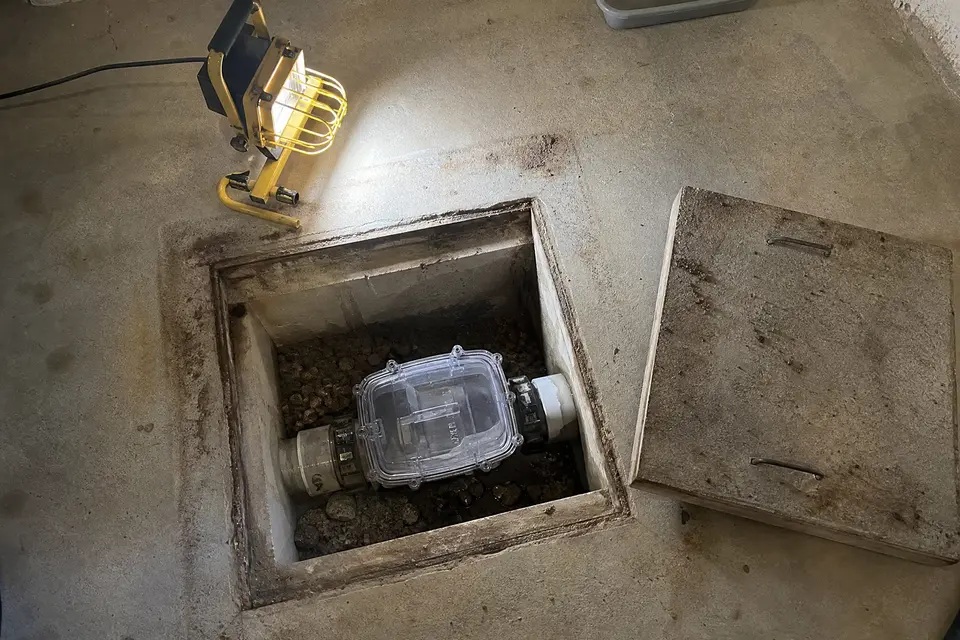
DC Water describes a backwater valve as a device, also called a backflow prevention device, installed on the sewer lateral that connects the building to the sewer in the street. A working valve allows flow in one direction only, out of the building. When the public sewer surcharges or a storm backs the system up, the valve is meant to keep wastewater from entering the building.
Alexandria calls the same device a backflow preventer. It can work automatically or be operated by hand. An automatic one can have a battery-powered light, like a smoke alarm, that shows whether it is open or closed. To protect you, it has to be closed during the overload, which Alexandria says varies with the size of the storm and generally lasts 2 to 6 hours.
What it cannot do
The valve only helps when the problem is wastewater coming back from the street. It will not clear a blocked lateral, and it does not stop water coming in through a foundation. Alexandria lists the trade-offs plainly. You cannot use your plumbing while the valve is closed. You cannot have flowing connections, such as a sump pump or downspout, discharging upstream of a closed valve. And you want a quality product that does not leak and can be maintained.
If you have a basement, a valve can protect fixtures below the street's level. If you do not, ask a plumber whether it fits your house. See basement backups for what to do when a backup is underway.
DC: rebate, permit, plumber
DC Water's rebate began with limited combined sewer areas and now extends to owners with a documented backup from the July 1, 2012 or September 10, 2020 storm. The first pathway, for owners in the combined sewer area with a documented backup since 2012, pays 100 percent up to $6,000; the 2020 storm pathway pays 100 percent of installation cost up to $6,000 per property. You start by using the eligibility request form. Questions go to DC Water at 202-787-2003. After installation, the owner or plumber uploads the documents for review and payment.
DC Water also says the DC Plumbing Code requires a permit for this work and that the permit must be obtained by a DC-licensed master plumber. DC Water's wording ties the permit to installing the valve. Cutting the floor and digging to the lateral is still a contractor's job. Permits by place and check a license show how to confirm the plumber.
Alexandria: reimbursement rules
Alexandria suggests a plumber licensed by both the State and the City. To qualify, the property must have a basement, finished or not; a plumber licensed by the State and City must install it; the city must be allowed to verify the installation; you or the plumber must have a permit and an approved final inspection; and you and the installer must certify payment in full. Apply before you get reimbursed; the city only pays those who applied and were approved. Send the application with a paid invoice or receipt. The city's page lists a Transportation and Environmental Services contact for program questions. It also separately lists the Department of Code Enforcement for installation permits. See Old Town for the combined sewer area.
Rules that apply either way
A valve is plumbing work on the sewer line, which makes it a job for a licensed plumber, and any excavation is for a licensed contractor after a call to 811. Do not attempt it yourself.
Check your own address
- Ask DC Water or Alexandria whether your address and backup history qualify before you hire anyone.
- Get a written scope from the plumber that names the permit and who pulls it.
- Ask the plumber whether the valve is automatic or manual, and where the indicator is.
- Write down which fixtures drain below the valve, so household members know what not to use when it is closed.
- Keep the permit, final inspection sign-off and paid invoice together for the rebate file.
Survey notes: sources for this page
- DC Water: backwater valve information and rebate. Opened November 3, 2026.
- DC Water: sewer backup. Opened November 3, 2026.
- Alexandria: city assistance program for sewer backflow prevention. Opened November 3, 2026.
- Alexandria: sewer and hydrant maintenance. Opened November 3, 2026.
- Fairfax County: residential wastewater. Opened November 3, 2026.
- IAPMO backwater valve video on DC Water's channel and City of Toronto backwater valve video. The Toronto subsidy mentioned in the second video is not available here.