Job · Asbestos pipe wrap
Asbestos pipe wrap: leave it alone
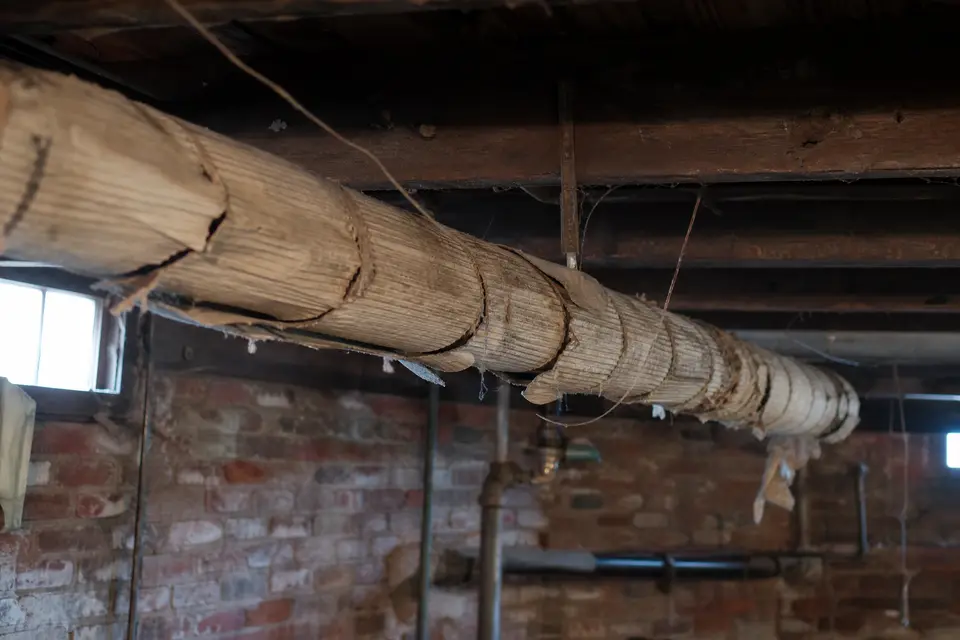
If pipe wrap might contain asbestos, do not touch, cut, sand or tear it; the EPA says undisturbed material generally poses no risk, and testing and removal belong to trained, accredited professionals.
Revised November 3, 2026 · who makes this map
| Place | What happens there | Turn to |
|---|---|---|
| DC | We found no DC page about pipe wrap. Plumbing work needs a Department of Buildings permit, and the form names a master plumber or gas fitter. Ask that person to tell you before work starts if wrapped pipe is in the way. | Sheet 1 |
| Arlington | Arlington requires a permit for moving or adding piping. No county page on asbestos wrap turned up. | Sheet 6 |
| Alexandria | Trade permits follow the building permit. We found no city page on asbestos wrap, so the federal guidance below is what we can cite. | Sheet 8 |
| Fairfax County | Land Development Services issues residential plumbing permits. We found no county page on wrap, but the county strongly recommends a licensed contractor for permit work. | Sheet 17 |
| The towns and small cities | Nothing on asbestos wrap turned up from the governments of Falls Church, Vienna, Herndon or Fairfax city. | Sheet 14 |
What the federal agencies say
The EPA lists pipe wraps and insulation among legacy materials that may contain asbestos. Its guidance says material left undisturbed generally poses no risk. It advises testing only if the material is damaged or a renovation will disturb it, and says sampling should be done by a trained, accredited professional.
The Consumer Product Safety Commission's home guide says material in good condition should be left alone. It says only a trained professional should seal pipe insulation. That guide is old, so treat it as a general statement of the principle rather than current detail. We could not open either federal page directly; both are from search summaries.
What that means in a house
The risk is in disturbing the material, not in having it. Dust and fibers are the concern, and that is why the instruction is to do nothing. In practice:
- Do not scrape, drill, sand, sweep up or vacuum it.
- Do not wrap it with tape, paint it or bag it yourself. Sealing is a job for a trained professional.
- Keep children and pets away from damaged wrap, and keep people out of the room until a professional has looked.
- Do not stand on or lean ladders against wrapped pipes.
You cannot tell by looking whether old wrap has asbestos. We do not suggest guessing, and we do not give identification tips. The only reliable answer is a sample taken by an accredited professional.
When plumbing work meets old wrap
Most trouble starts during a project: a repipe, a water heater swap, a basement renovation or a leak repair that means opening a wall. Before a plumber starts, tell them the wrap is there or may be. A good plumber will stop and say so rather than cut through it. If a plumber says the wrap is in the way, the next call is to a trained professional, not to a different plumber who will do it faster.
The same caution applies after a flood or a basement backup, when wet material crumbles and cleanup crews are tempted to clear it fast. Stop and ask first.
Repiping or replacing a water heater in an older house can involve wrapped pipes. For the heater side, see gas water heaters. For permits and who may pull them, see permits by place.
Who does what
Virginia and DC each license trades differently, and we found no page that names an asbestos license in either place, so we do not name one. Ask any asbestos professional for their accreditation and for the sample result in writing. If unsure, call a licensed pro for the plumbing and a trained professional for the wrap.
Check your own address
- Before any renovation or plumbing job, tell the contractor in writing which pipes are wrapped and that you want work on them to stop until the material is checked.
- If the wrap is torn or crumbling, keep people out of the area and call a trained, accredited professional for sampling.
- Ask the professional for the sample result in writing before you let anyone cut into the pipe.
- In DC, give the master plumber named on the permit that information; in Virginia, give it to the contractor named on the county or city permit.
Survey notes: sources for this page
- EPA, actions to protect the public from exposure to asbestos. Known to us only from a search listing of the page.; not opened.
- CPSC, asbestos in the home. Known to us only from a search listing of the page; the site would not open for us.
- Fairfax County, residential plumbing permit. Opened November 3, 2026.
- DC Department of Buildings, permitting FAQs. Opened November 3, 2026.