Job · Lead service lines
Lead service lines: finding out, then acting
A lead service line is the pipe from the water main to your house; ask your utility for its record first, because the utility's inventory, not a test on your own pipe, is the safe place to start.
Revised November 3, 2026 · who makes this map
| Place | What happens there | Turn to |
|---|---|---|
| DC | DC Water keeps a public map with five colors and runs several replacement programs, some free. Its page says homes built before the 1980s were typically built with a lead line. | Sheet 4 |
| Arlington | Arlington's 2024 inventory turned up no lead lines on the public side, and the county says it never used lead there. Older houses may still have lead on the owner's stretch. | Sheet 6 |
| Alexandria | The water company is Virginia American Water, whose lead page would not open here. Ask it for the record on your address. | Sheet 8 |
| Fairfax Water area | Fairfax Water's responsibility runs through the meter, with the owner taking over beyond it. Its lead-free page would not open; ask what it has on file. | Sheet 12 |
| Vienna and Herndon | Both towns run or maintain their own systems; Herndon has a lead and copper page. Ask the town what is on file. | Sheet 15 |
What the pipe is
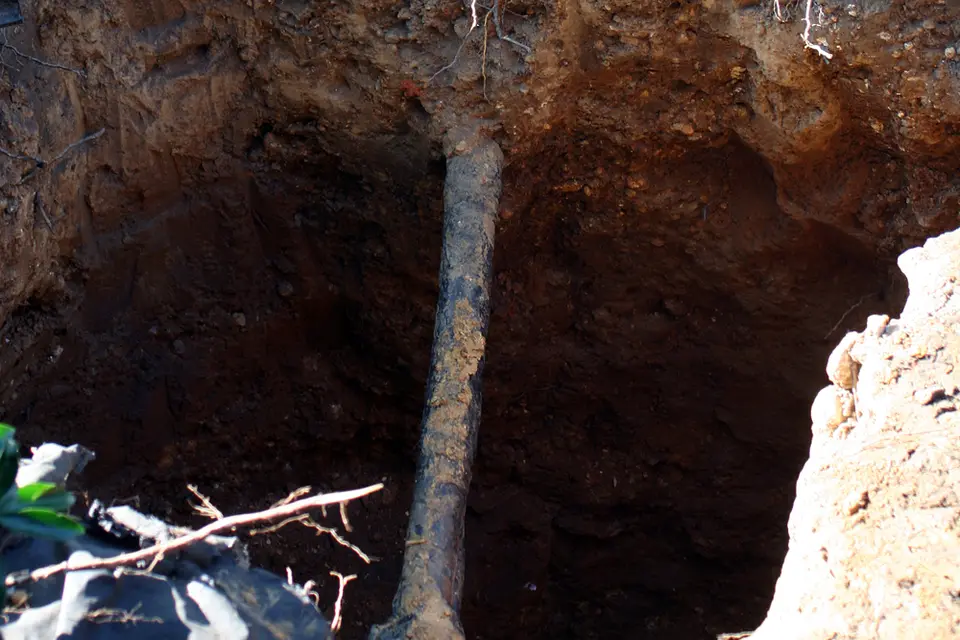
A service line runs from the water main, through a meter, to the plumbing inside your house. Part of it is the utility's and part is yours; the ownership page shows where the split falls in each place. Lead was used for these pipes in older construction. Lead pipe in the house, lead solder and old brass fittings can also add lead. DC Water notes that solder with lead was used in household plumbing until 1987, that brass fittings and faucets made before 1986 may contain it, and that until 2014 brass sold as "lead-free" could still contain up to eight percent lead.
EPA states there is no safe level of lead exposure. EPA also says nearby construction can release more lead into water.
The new federal rule
Under EPA's Lead and Copper Rule Improvements (final rule, October 2024), a water system has 10 years to identify and replace its lead pipes. EPA's page was last updated December 29, 2025. The rule is under court challenge: the case is American Water Works Association v. EPA, and one advocacy group's page said arguments were expected in fall 2026. We have not checked the docket, so assume the schedule could change and ask your utility what it plans for your street.
How to find out
Start with records, not pipes.
1. Find your address on the utility's inventory. DC Water's map uses blue for verified non-lead, green for suspected non-lead, yellow for no information, orange for suspected lead and red for verified lead. Orange, yellow and green are unconfirmed, and DC Water says much of its data comes from historic records. 2. Call or write the utility. In DC, Lead Free DC answers at 202-787-4044. 3. If the record is unclear, ask a licensed plumber to inspect and give you a written statement of the material. Do not cut, drill or scrape a pipe to find out, or disturb it in any other way. A damaged lead pipe can release lead, and a wrong guess helps no one. 4. Send what you learn to the utility so it can correct its record.
What to do while you wait
For homes, EPA's page suggests a filter certified to remove lead, questions to the utility and a licensed plumber about the service line, and extra caution after construction nearby. Filters differ, so look for the certification claim on the package and follow the maker's replacement schedule. Where a household includes someone pregnant or nursing, or a child under six, say so when you call the utility, because DC Water's priority program names those households.
If a lead line is replaced, flush as the utility instructs afterward. DC Water has a short video on that, shown on DC lead programs.
Replacement, and who pays
The pattern around here is that the utility pays for its side and the owner pays for theirs, except where a program steps in.
- In DC, replacement during a capital project can be free on private property if you sign a Right of Entry. Other programs cover private-side work for enrolled homeowners or those with a qualifying need. Details are on DC lead programs.
- In Virginia, Arlington says replacement of lead on the owner's side is voluntary. Other utilities have their own plans; see lead in Virginia.
- Renters should ask the owner to request replacement. DC law requires landlords to disclose known lead pipes to tenants, and sellers to disclose them to buyers.
DC Water coordinates work so public and private sides are replaced together where it can. If your plumber proposes replacing just your side, ask what the utility plans for the public side.
Check your own address
- In DC, use the lead map; in Virginia, ask your utility for the written record of your service line material.
- Ask the utility who holds the permit and who coordinates if you replace your side.
- Ask your landlord or the seller's paperwork whether lead pipes are known; DC law requires disclosure.
- Buy a filter whose label states certification for lead removal, and note the replacement date on a calendar.
- Check whether a DC Water project is planned on your block before paying for a private-side replacement.
Survey notes: sources for this page
- EPA: Lead and Copper Rule Improvements. Opened November 3, 2026.
- EPA: basic information about lead in drinking water. Opened November 3, 2026.
- NRDC: AWWA v. EPA case page. Known to us only from a search listing of the page; court docket not checked.
- DC Water: let us help you find out. Opened November 3, 2026.
- DC Water: lead pipe replacement programs. Opened November 3, 2026.
- Arlington County: water service line inventory. Known to us only from a search listing of the page; the site would not open for us.
- Fairfax Water: lead free. Known to us only from a search listing of the page; only the ownership split is taken from it.