Job · Polybutylene pipe
Polybutylene pipe: what we could and could not find
We found no government source and no county or utility record of where polybutylene was used in DC or Northern Virginia; everything here comes from trade and law-firm summaries, so have a licensed plumber confirm.
Revised November 3, 2026 · who makes this map
| Place | What happens there | Turn to |
|---|---|---|
| DC | We found no DC Water or Department of Buildings record of where polybutylene was installed. A repipe is plumbing work under DC's permit system, with a licensed tradesperson named on the form. | Sheet 1 |
| Arlington | We found no county record. Arlington's permit page lists adding, removing or relocating piping, and an owner of a single-family house or townhouse may pull the permit. | Sheet 6 |
| Alexandria | We found no city record. The Permit Center issues trade permits after the building permit, under the Virginia codes. | Sheet 8 |
| Fairfax County | We found no county record. Land Development Services lists a residential plumbing permit for new or replacing and repairing equipment and fixtures, and strongly recommends a licensed contractor. | Sheet 17 |
| Smaller governments | The four smaller governments published nothing on this pipe that we found, and the permit office in two of them is unconfirmed. | Sheet 15 |
What this page is, and is not
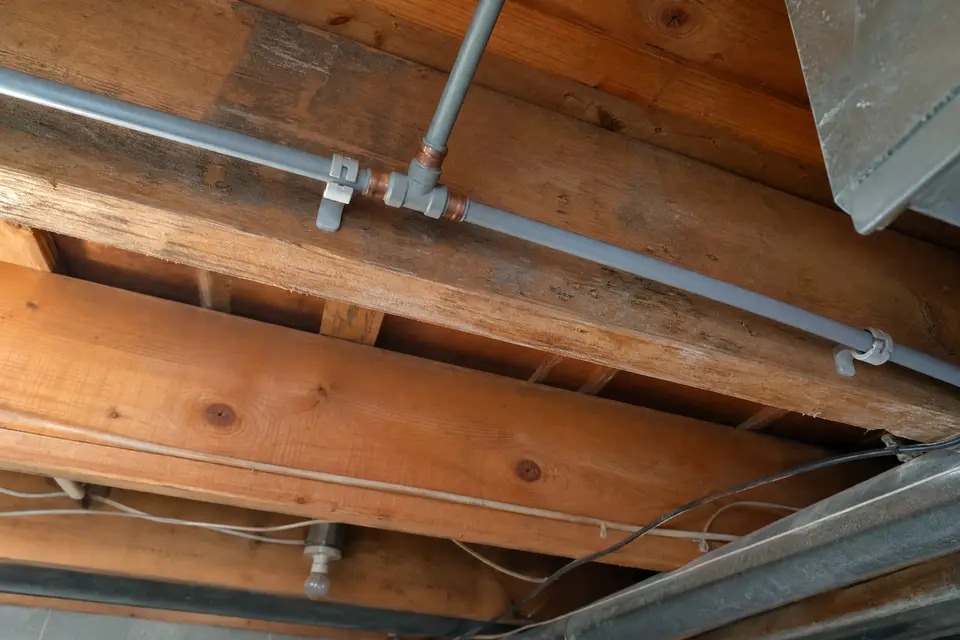
Polybutylene is a plastic water-supply pipe that homeowners ask about. We could not find a government page on it. No Virginia or DC county, utility or permit office we opened says where it went in, so we cannot tell you whether your street or your house has any.
What exists is commercial: contractor magazines, a law firm's page and a 1995 newspaper report. Treat them as summaries, not records.
What the summaries say
They describe a class action, Cox v. Shell, decided in a Tennessee court in 1995, with a settlement fund of $950 million. It covered polybutylene pipe with acetal insert fittings installed between January 1, 1978 and July 31, 1995. Shell and Hoechst Celanese denied that the pipe was faulty. One source says the claims centre closed in 2009; we found only that one source for that date.
So the settlement is history. We cannot confirm that any claim is open today, and we do not suggest one is.
How a homeowner finds out
A licensed plumber can identify what the supply pipe is. We do not give identification tips, because that tends to mean opening walls or cutting pipe. Do not cut into pipe to look. If a seller, an inspector or an insurer says the house has this pipe, ask for the plumber's written finding, and ask where it is, not just whether it exists.
Water entering the house comes through the service line, which belongs to different people on each side of the meter; see who owns which pipe. A repipe of the house piping is the owner's job, while the service line is split with the utility. If you also have an old lead question about the street side, read lead service lines.
Repiping and the paperwork
Repipe quotes often name one of two materials: PEX pipe at PlumbingSupplyAndMore (that store has the same owners as this map).
or: copper pipe at PlumbingSupplyAndMore (that store has the same owners as this map).
Ask which the quote uses and why. Then ask who pulls the permit. See permits by place for the office in each jurisdiction, and check a license for the license lookup. In Virginia, DPOR licenses contractors by class, with plumbing as a specialty. In DC, the Board of Industrial Trades covers plumbers and gas fitters.
Water damage and cost
No page we opened gives a price for a repipe, so we give none. Quotes differ by house size, access and the number of fixtures, and we have no sourced figure to offer. Ask for at least two written quotes that name the pipe material, the permit and who patches the walls afterwards. A licensed contractor should be willing to put all three in writing.
What the summaries do not settle is whether one house is affected. That is a question about a specific pipe in a specific wall.
Leaks
If a pipe leaks, the cost of leaked water on the owner's side can fall to the owner; in Arlington, for example, the county says that on the meter-to-building side. We did not confirm how insurers treat this pipe, so ask yours directly.
Check your own address
- Ask a licensed plumber to state in writing what material your supply piping is and where it runs.
- If you are buying, ask the seller for any repipe records and the permit number.
- Look up the plumber's license: DPOR in Virginia, DLCP in DC.
- Ask your insurer in writing whether it covers this pipe.
- Do not rely on a settlement date as a promise of money; no source we opened says any claim is open.
Survey notes: sources for this page
- Contractor magazine, polybutylene settlement money. Known to us only from a search listing of the page.; not opened.
- Lieff Cabraser, polybutylene piping. Known to us only from a search listing of the page.; not opened.
- Spokesman-Review, November 10, 1995. Known to us only from a search listing of the page.; not opened.
- Fairfax County, residential plumbing permit. Opened November 3, 2026.
- Arlington County, plumbing and gas permits. Known to us only from a search listing of the page; the site would not open for us.
- DC Department of Buildings, permitting FAQs. Opened November 3, 2026.